- Can icons be universal? Why/why not?
- Can you think of an icon in everyday society? What is it and how did it affect you? Is this different from an icon in a comic?
- If comics become more realistic and stories become more elaborate, does this defeat the purpose of the comic?
- Can iconography limit our creative potential?
- Should icons morph? Should there be a universal icon for an idea? Is there a current icon said to be universal?
Arch390/790 Visible Certainty University of Wisconsin-Milwaukee SARUP Chris Cornelius, Associate Professor
11 October 2011
Narrative Armature
10 October 2011
Being John Malkevich
Charlie Kaufman: why I wrote Being John Malkovich
27 September 2011
Week 4: Index
Notes on the Index:
Part 1
- Krauss describes the shifter as a device used by Acconci to shift the viewers perception from viewing art to being self-aware. When in architecture is it important to make the user/viewer self-aware?
- What is the index and how does it relate to the shifter?
- Can architectural photography act as a valid index of space and experience?
- In Krauss’s view, this ‘snapshot’ is the ‘readymade’ which in her view is empty. Do you agree or disagree?
- Krauss clarifies the idea of the index by Duchamp’s ‘With My Tongue in My Cheek’. In this example, she uses the casting of the face as the index, and the self-portrait as the icon. How can this duality be applied in architecture?
Part 2
- Describe what Krauss means when she says a photograph is like a ‘message without code’.
- When a text is provided as a supplementary description to a piece of art, does that explanation become one that guides or misguides the audience? Or both?
- Krauss juxtaposes the art work of Pozzi and Kelly to help define the index in its immediate context. Is this something that we as architects can liken to the idea of site context? Should our design intent be as obvious as Pozzi’s panintings?
- Krauss describes the work of Gordan Matta Clark at p.s.1 as: “bringing the building into consciousness of the viewer in the form of a ghost”, in this example does the building represent the index?
- The photograph can be seen as a paradox – “presence seen as past” Explain Krauss’ argument/examples.
- Can we use indexing to sub- consciously affect our audiences understanding of our design?
20 September 2011
Mapping
1) Tufte talks about the importance of scale when mapping or diagraming. How does this apply to us as architectural designers? Does the work we do always need scale?
2) Tufte sets out to separate the diagramming of Loran and Hockney from the mapping of art images by Mossel – he argues that Hockney and Loran are credible because they are explaining something coherent about the image, conversely he speaks of Mossel’s diagraming as “explains everything and therefore nothing”. Would you agree/disagree that as architects we need to be equally aware and critical of our own design processes?
3) Are modern day mapping techniques lacking in innovations? Corner argues that other fields have been progressing while mapping and cartography are stagnant – the focus and standard being tracings vs. representations of place, time and movement.
4) A key term for Corner is the French term ‘Milieu’ meaning; surroundings, medium or middle. He goes on to describe the process of cognitive mapping happens within a field that is encompassing a series of points or interactions. How does this apply to design process at the building scale vs. city scale?
5) Corner goes on to give examples of how mapping can break the barrier of simply tracing. He separate's them into the categories; Drift, Layering, Game-Board and Rhizome. How are each of these techniques different and what are the merits of each?
1. Maps can convey a great amount of direct meaning but can also give a bias towards a certain type of agenda or to make a certain point. In what ways can maps be bias and skew information to make a certain argument or push for a certain agenda?
2. Since maps can convey certain information should they be an accurate as possible depiction of reality or is it OK for them to highlight only certain amounts information that benefit the authors intent. For instance should it be more research like in that you are given all the data and decide yourself or should it paint the picture for you?
3. Tufte said that, “mappings become more credible if constructed independently of a favored result.” How do you construct a map independently of a favored result if the goal is to usually make a point or show something?
4. Is it possible to show too much information on a map? And if so how can it affect the meaning of the authors intent? Can it be damaging to the effectiveness of the map?
5. Does anyone disagree with the fact that mapping should come before planning and if so why?
13 September 2011
Abstraction what is not and is?
Jacob Walker and Roberto Jaimes
ABSTRACTION IS NOT
1) Under harmful dichotomy abstraction is said to be described in terms of words, but could one say that abstraction can be described in the physical form or art and design?
2) Is abstraction possible without precedent?
3) What is the difference between perception and abstraction?
Does the idea of harmful dichotomy enrich abstraction or cloud it?
4) If a sound is not an abstraction to a blind man, how can a blind man abstract sound?
How can extension presuppose intension? How can intension presuppose extension?
5) James describes confusion as a lapse into an undiscriminating state, where the author argues it is a result of special conditions.
Are these conditioning ideas?
Is there a more valid explanation?
6) Does fusion create or facilitate confusion?
7) If abstraction can be understood as, "A smaller quantity containing the virtue or power of a greater," How can we know if there is still too large or too small a sample to accurately abstract an entity?
8) Do the three difficulties of simply removing elements clarify integrated concepts, or does it simply tell you what a concept is not?
Is it an effective explanation? Can you confidently abstract?
ABSTRACTION IS
1) What is the difference between genus and differentia?
2) What makes a concept generative?
How do we know a concept is generative?
3) How can concepts be altered to accommodate qualitative differences?
Are qualitative differences always important for abstraction?
4) What comes first, A type or a container?
Can they be reversed? Does on inform the other?
Is the process of generating containers and types happen sequentially?
5)How can we make the distinction between a generality that is intended and a generality that is perceived?
6) What is a concept? How do we know when something has become a concept?
7) How do dynamic concepts allow for a lack of physical continuity?
8) What is generalization? How does it relate to abstraction?
10 September 2011
2011 Discussion Leaders - Chicago
Week 3 - Wesley, Gozdowiak
Week 4 - Kristo, Gozdowiak
Week 6 - Corbett, Tretow, Webb
Week 7 - Okeson, Burke
Week 9 - Hicks, Burke
Week 11 - Bartlett, Corbett
Week 13 - Bartlett, Tretow, Walker
Week 14 - Webb, Jaimes, Hicks
Week 15 - Okeson, Kristo, Wesley
28 July 2011
Cinemetrics
cinemetrics from fb on Vimeo.
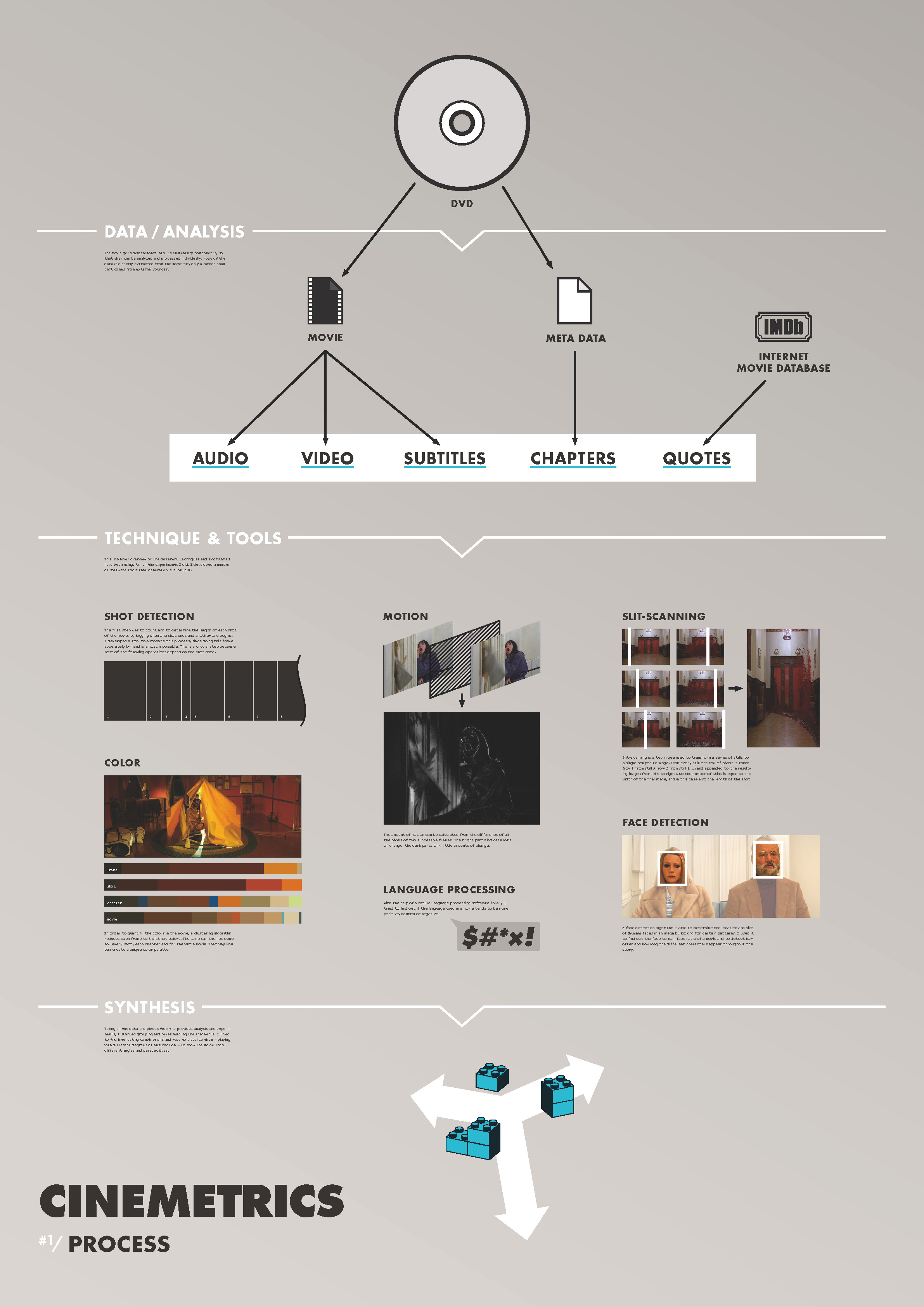
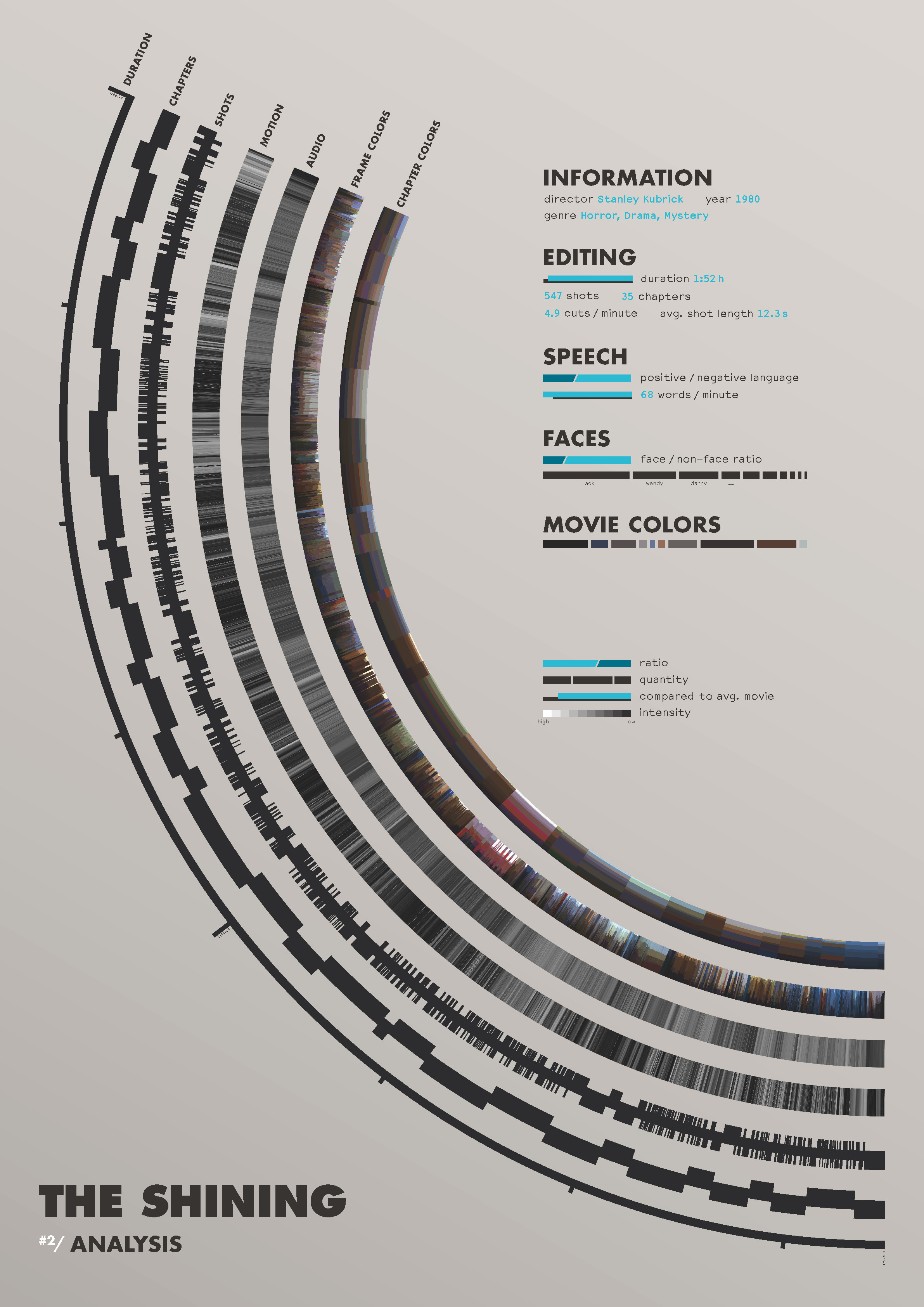
An extraordinary film visualization tool. What distinguishes this from others is the incorporation of movement. A films dynamic is made apparent and you can compare films, directors, etc.
from the website:
"cinemetrics is about measuring and visualizing movie data, in order to reveal the characteristics of films and to create a visual “fingerprint” for them. Information such as the editing structure, color, speech or motion are extracted, analyzed and transformed into graphic representations so that movies can be seen as a whole and easily interpreted or compared side by side."
Cinemetrics
13 July 2011
Mode of Representation needs to be Rethought
After outlining modes of representation used during the Renaissance, late sixteenth and seventeenth centuries, Agrest states, “while new vocabularies are developed in this process generating stylistic changes, the mechanisms of production of form remain untouched, as can be seen in very recent examples of practice” pg. 167. What does she mean by this statement? What in your opinion can be done to change this fact?
In describing the plan in the Carpenter Center, Agrest states, “This building offers a vivid example of the overdetermined nature of representation in architecture” pg. 170. What are your thoughts on the representational mechanisms Le Corbusier used? How effect were they in your opinion?
In the Urban Reading section of the reading, Agrest states that, “the city requires a different approach to the questions of perception and representation”, than previously used pg 173. Do you think Google Map and similar programs are the new version of what Eugene Atget photographing Paris was a hundred years ago? Do you find these new tools to be effective in helping you design better or to see the city from the different perspective?
Agrest says that given the complexities of the contemporary city, new modes of representation are needed. What could these new modes of representations be? How important will it be to use such medium as film and animations to communicate your designs?
“It seems that the computer only operates as a tool in the production of an architecture that in terms of its mechanisms of representation is not very different from previous historical periods” pg176. Do you think that the computer has made us more detached from our surroundings? If architecture played more on the senses, architecture would become less of a flat visual image as it is today.
get to the point.
Tufte seems to suggest that the ‘pitch culture’ is a hazard to greater knowledge. He shows, in fact, how the meeting ‘pitch’ sold bad information to NASA executives, ultimately leading to grave human loss. In our experience, presentations are very much rooted is this same ‘pitch culture.’ Buzz words, spin, inflection and performance often times speak louder about our projects then the drawings themselves. Perhaps more prevalent, a poor pitch person can not sell a good project. How have you witnessed this phenomenon? Knowing that this condition is not exclusive to architectural education (it will continue to prevail while pushing ideas and courting clients) how does a mastery of this skill to pitch factor into your own experience? Is this as diabolical as Tufte suggests? What are the ground rules or foundation lessons in our architectural pitch culture?
The relative amount of information included or excluded from a slide, chart or graph bears much of Tufte’s criticism in the analysis of PowerPoint. As architects, we are not fond of overlong written explanations. In fact, we are told many time that architects simply do not read the text at all. They just look at the pictures. What does Tufte’s opinion mean to us? Why do we value brevity and is this at odds with the reading’s analysis? We are all familiar with the phrase less is more in formal reasoning. Is this true of presentation information, as well?
We have already discussed somewhat the notion that images in isolation are relatively less explanatory then comparisons drawn from multiple images side by side. Tufte agrees with us, rejecting the notion of conventional PowerPoint teaching that one idea per slide is always best. Other then showing two images simultaneously, what are ways that we can in our presentation draw conclusions through comparison? How can we relate dynamic information? How do stagnant images communicate to an audience? When are they appropriate? When are they not?
Tufte includes and amusing illustration of a jar of PowerPoint Phluff. These are the add-ons, ‘features’ and other imagery that add pizzazz, but no meaning. They dilute the information, boring the audience, which in turn requires more Phluff to stimulate a drained interest. We surely have out own variety of architectural presentation fluff. What have you witnessed that would fall in this category? How was this fluff received by the class or jury? When is fluff useful and when is fluff for fluff’s sake?
11 July 2011
Allen
Notations + Diagrams: Mapping the Intangible
1. How does Allen define the difference between notation and diagram? When is it most effective for architects to use diagrams versus notations according to Allen? And do you agree w/ his points of view on this regard?
2. After Goodman’s distinguishes broadly between two types of art forms autographic and allographic, he goes further and states, “that architecture is neither clearly” either pg. 46. What does he mean by this statement?
3. “If architecture is to work beyond the level of image it needs to invent new tools to work more effectively w/ in the immaterial networks and systems that comprise the city in the late twentieth century” pg. 59. What creative new tools is Allen suggesting that architects develop to address these issues?
4. How beneficial would it be for architects to study or incorporate other forms of disciplines in their work such as film, theater, dance and music?
MUYBRIDGE & MOVEMENT: the body in time and space
1. On Pg.59 Allen establishes a position that architecture has been marginalized because it is not part of the “great three variables: Territory, communication, & speed." This condition has architects reduced to working on the surface of the city. The architect’s lack of involvement in these three variables continues to pave the way for urban erasure resulting in utilitarian neutral environments devoid of meaning. He states for architects to stay relevant we need to be more socially and politically in tune. Allen points to dynamic architectural notations as the a component to the secret elixir. However powerful the notation may be, it does little to engage an architecturally ignorant public and political structure. What current mediums do we have for social engagement? How else might we engage socially and politically to instill the urgency of architecture ?
2. Can you think of examples in which Arnhiem’s studies of movement have been or could be successfully applied to Allen’s Notations: 5 Working Definitions: Anticipation, Invisible, Time, Collective (pg 64.)?
3. (pg. 406 - 408) Arnhiem posits that the delivery of scale and speed is critical semantics conveyed within the physical For the gesticulation of a dancer is equal in power to facial expression of a stage actor. Therefore through proper training anyone can be an actor if trained for the precise delivery method? However, Laban points out an additional variable, Antrieb, the nature by which the actor delivers or shapes the movement. How would you define Antrieb?
06 July 2011
Research Methodologies & Experimental Architecture
2) Woods p.23 "All designed Space is in fact pure abstraction, truer to a mathematical system than to any human 'function.'" Do you agree with his assessment?
3) Woods describes his 'free-space' on page 27. He speaks of secret rooms devoid of any meaning and filled with electronics for communicating with other 'free-spaces.' Doesn't this give the spaces a function? Can a space ever be totally 'free.' If so how would you use such a space (or would you use it at all)?
4) Does Woods' Twenty Tactics of New Practice (p.28) seem plausible? If a city were destroyed, could this be a viable scenario for reconstruction, or is it just theory?
5) Spiller (p.13-14). Ledoux wanted to bring social order and remove the bad habits of his workers through architecture. Do you think this is an achievable goal? Was surveillance relied upon to much in his plan?
6) How useful is the purely theoretical architecture describe by Stiller? Does is serve a practical purpose other than art?
7) Is it more important to develop a new theory (or set of theories) with every project as Allen suggests on page XII and XIII, or should architects also be trying to develop their own style?
8) Do you agree with Allen (p.XIV) that architecture is a material and not discursive practice? Or is it something of a mixture of the two?
03 July 2011
Avoiding digital pitfalls
1) “Science and architecture often meet in their common attempt to shape or reshape the categories of visual perception” (Picon, 295) In this age of “green” or “sustainable architecture”, how much more important is it for the collaboration of science in the today’s designs.
2) “Architectural form used to appear as the ultimate result of a process of research…….A computer-generated architectural form can no longer pretend to achieve this status” (Picon, 303). So even if said form originated in your sketch book, if the end result is a computer-generated rendering, is it failure? Why? Just because the pencil is no longer present, in the final document?
3) “Part of the problem is linked to an impression of arbitrariness. Why has the designer stopped the process of geometrical transformation at one stage and not the other?” (Picon, 304) I can’t help but think of Revit after this statement. Can the limitations of peoples knowledge of BIM affect the end result of the designs?
4) “these techniques of visualization ignore what has traditionally given architectural representation its particular power of conceptualization, that is to say, its necessary degree of abstraction” (Allen, 75) How does everyone feel about photorealistic renderings? Is there something missing? Is there actually too much shown?
5) Can you have a computer generated rendering that is not exactly photorealistic that still portrays your ideas, and still have a “traditional” feel? ( LTL Architects for example) Or does the fact that you pulled something out of the computer ruin everything?
02 July 2011
Avoiding Digital Pitfalls
28 June 2011
What To Do With Numbers
so far... and more...
1. Tufte explains the temporal flip-parallelism as “enhancing the reading of differences, which is the exact purpose of comparisons in parallel.” He also states “despite the enchantment of flaps, comparisons are usually more effective when the information is adjacent in space rather than stacked in time” (Parallelism p.81) Which do you think is more effective? Do you have any examples of where one is better than the other?
2. On page 82 of Parallelism would you have been able to understand Margaret Morris' 'The Notation of Movement' without the explanatory notes? Tufte describes this example as “images in graceful parallel”. Did you find it to have 'good form' that 'is clear but not a spectacle'? Was her 'abstract notational system' understandable to you after you realized the meaning of those notations?
3. (p 83 Parallelism) “Editors of Newton's optical letters and lectures have been very negligent in such particulars, their diagrams often violating fundamental optical laws.” Does architecture have certain fundamental laws that need to be followed in parallel diagrams?
4. (p 86 Parallelism) Even though Peter Apian designed his diagrams with elaborate detail, was it as effective as the simple cube drawings used by Banchoff? When making a diagram 'less tedious' as Apian did, by changing or interchanging characters, can we complicate the understanding of it?
5. (p92 Parallelism)The cosmonauts of Salyut 6 found the wealth of information in their meter-long chart to be a “constant reminder of the lengthy ordeal ahead.” Can too much information be a burden to us? How would you compare the cyclogram of the cosmonauts with the coded images from Catich's 'Letters...' p98 ?
6. (p100 Parallelism) Can you think of a better parallel to match the names to the people in the photograph from 'Popular Astronomy'? On page 101 Tufte explains how “two thirds of 'confusing codes' can be avoided by means of thoughtful design, direct labels, and close integration of explanatory text with images.” How would you have simplified Scheiner's sunspot drawings?
7. On page 102 of Parallelism Tufte describes faulty parallelism. How is this sometimes used in the area of product design? Are we being dishonest if we use faulty parallelism in our design presentations, or is this acceptable?
8.(p ? Beautiful Evidence)How would you define a sparkline and where does its importance lie in the field of architecture?
9. (p.52 Beautiful Evidence)Did you find the use of sparklines & parallelism in “The DNA of Human Chromosome 7” easily understandable? In your examination of the 3-D scatterplot (p57) did you find it to be more or less understandable than the DNA diagram.
10. (p.63 Beautiful Evidence) “Just as sparklines are like words, distribution of sparklines on a page are like sentences & paragraphs.” What might cause are 'words' to be hard to understand and our 'sentences' hard to read?